11 posts tagged with "javascript"

View all tags

jsdom or happy-dom? Pros, cons and a benchmark you can reproduce

· 10 min read

Bruno Carneiro
Fundador da @TautornTech
jsdom vs happy-dom

Every front-end project using Vitest reaches this question at some point: environment: 'jsdom' or environment: 'happy-dom'?

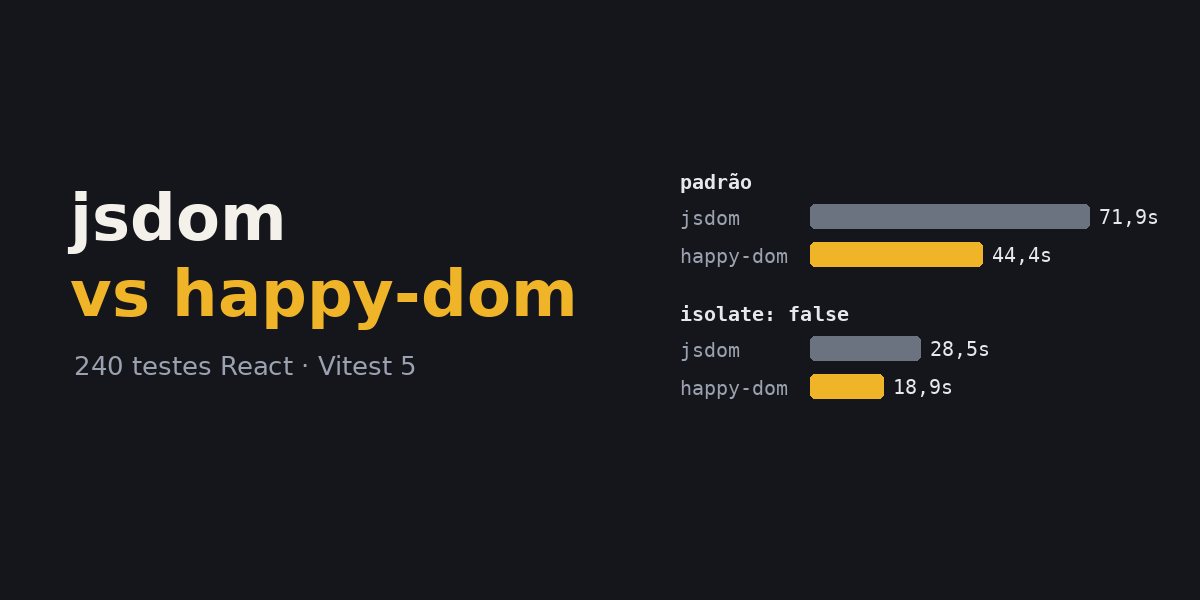
The answer you usually find is "happy-dom is 2 to 4 times faster". I went looking for where that number comes from and, in most articles, it has no code, no methodology and no versions. So I decided to measure it.

I built a suite with 240 React component tests and ran it in both environments, under different Vitest configurations, several times. I also checked 20 browser APIs and behaviors in both to see what each one actually implements. The result has a surprise: Vitest's configuration matters more than the choice of library.

Temporal and the end of new Date() (and the date bugs we put up with for 30 years)

· 13 min read
Bruno Carneiro
Fundador da @TautornTech
The Temporal API in JavaScript

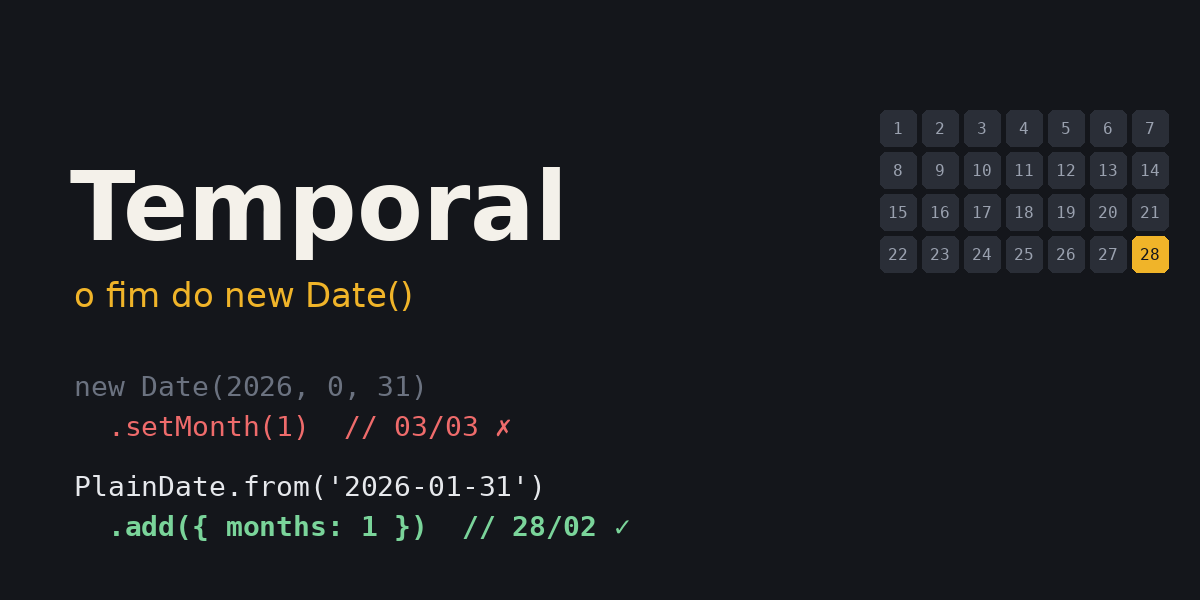
Every JavaScript developer has a story with Date. The report that showed the previous day. The due date that jumped from January 31 to March 3. The birth date that changed when the user was in another time zone. The 300KB moment installed just to add a month.

Date was created in 1995, in a few days, copied from java.util.Date. Java itself deprecated most of that API shortly afterwards. JavaScript kept it for 30 years.

That's over. In March 2026 Temporal reached Stage 4 at TC39 and became part of ECMAScript 2026. It already runs without flags in Chrome, Edge, Firefox and Node 26.

This article is about what actually got better. With real, running examples, side by side with new Date().

Running AI Directly in the Browser with TensorFlow.js

· 8 min read
Bruno Carneiro
Fundador da @TautornTech

Machine learning always seemed distant from frontend — Python, powerful servers, expensive GPUs. But that changed. Today it's possible to run a trained AI model directly in the browser, with zero backend, using pure JavaScript and the user's own GPU.

This article explains how this works in practice, using TensorFlow.js as a foundation — and how I applied it in a project called SeeFood, a classifier that solves humanity's greatest problem: knowing whether what you're about to eat is a hot dog or not.

Detecting Circular Imports with Madge (and Locking Down Regressions in Lint)

· 9 min read
Bruno Carneiro
Fundador da @TautornTech
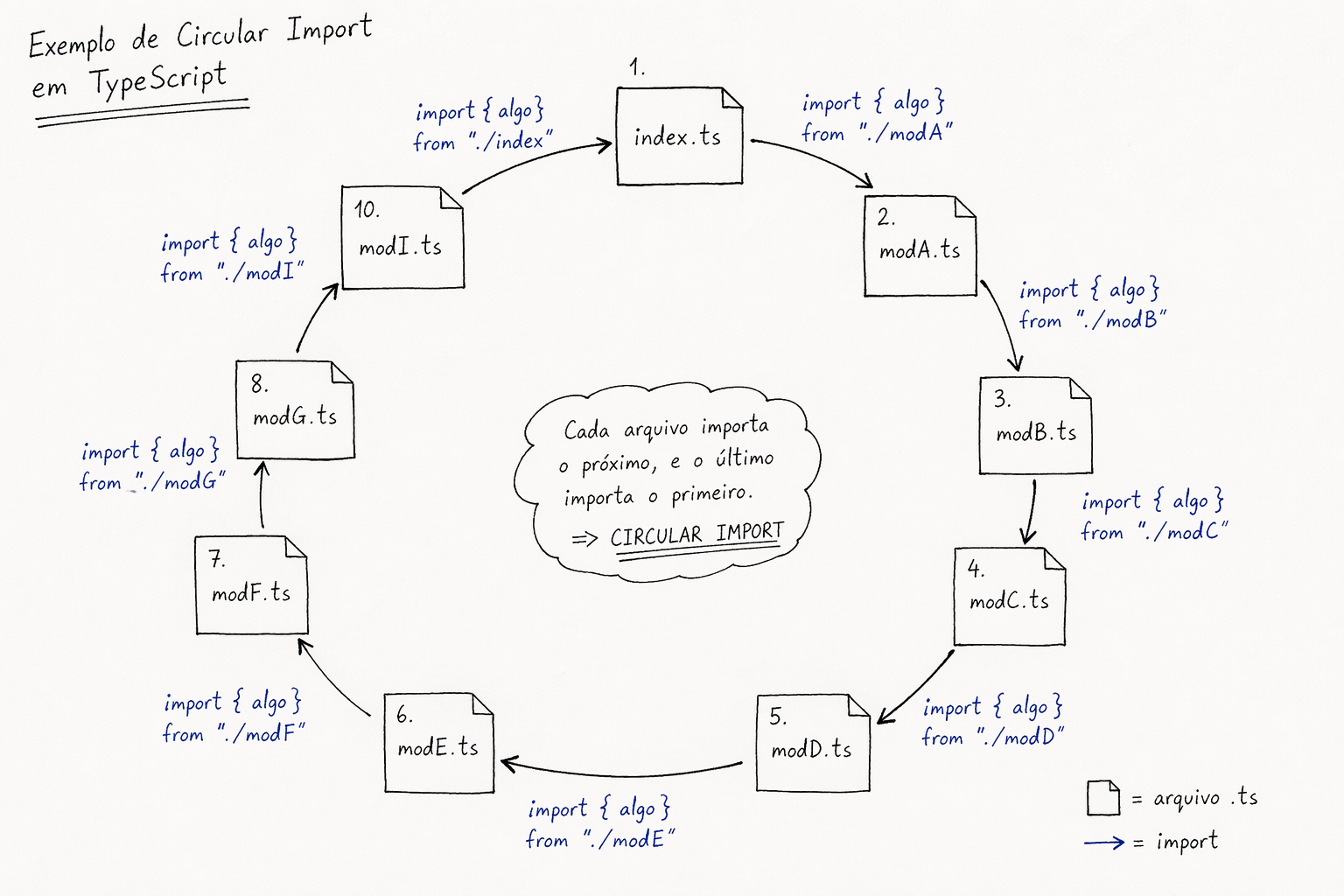
Illustrative diagram of an import cycle between TypeScript modules

Anyone who has spent hours chasing an undefined in the middle of a bundle or a strange behavior only in production knows how an unresolved import chain can become a headache. One of the frequent culprits is the circular import: module A imports B, B imports C, and somewhere in the chain someone imports A again — closing a cycle.

It's wonderful — the build works, the project runs locally, but when you try to deploy, it breaks! \o/

I've seen this in small projects and in large ones; the only difference is the size of the problem you'll face. You can spot the headache with Madge and it's a lifesaver!

To lock up TypeScript, a circular import is a treat.